


Survival Sandbox: Playground
3.416.00 Reviews
App Specs
- Version
- 3.3
- Updated On
- License
- Free
- Downloads
- 1,000,000+
- Developer
- Ghaddan Studios
- Categories
- Simulation
- Platform
- Android
Screenshots
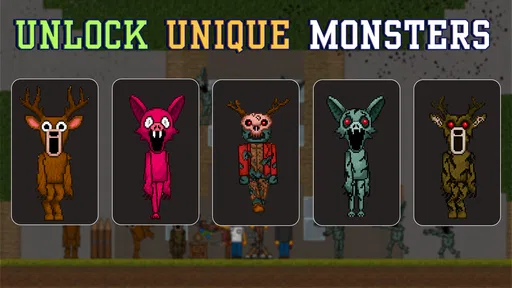
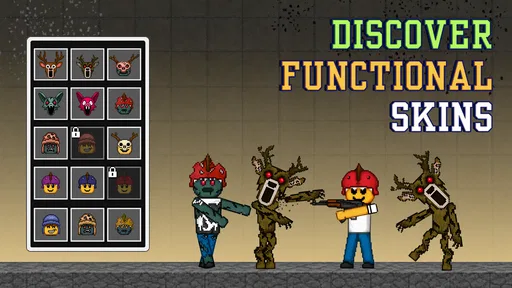
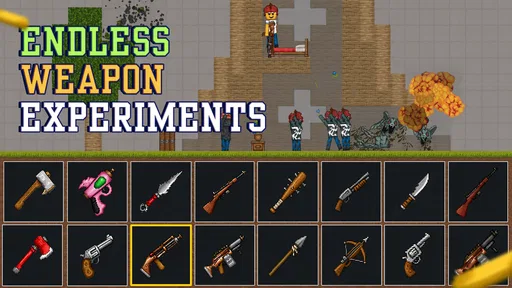
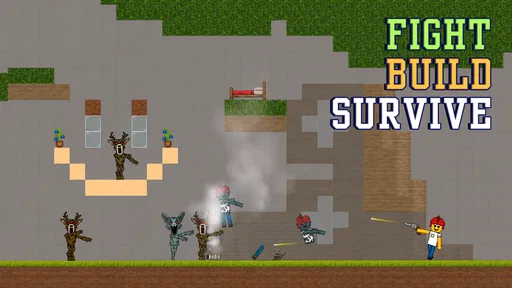
 Analysis by AppCompare
I would approach Survival Sandbox: Playground as a pick-up-and-try survival game rather than a polished, story-led adventure. Its appeal is the promise of making it through dangerous nights in a chaotic monster-filled setting. That gives it a clear hook, but it also sets expectations: if you want a carefully guided campaign or a calm building simulator, this is probably not the experience you are looking for.
What makes the game worth considering is the mix of survival pressure and sandbox-style freedom. Instead of judging it only by how many activities it offers, I would ask whether you enjoy figuring out your own priorities when a game puts danger and experimentation together. The answer matters more here than it would for a straightforward puzzle or management game.
Choose it for improvisation, not a scripted journey
I’d judge this game by whether I enjoy making my own plan when the situation feels unpredictable, rather than by expecting a sequence of clearly marked goals. That distinction is useful before installing: it helps separate the appeal of improvisation from the appeal of a scripted survival story, which is a better fit for some players.
The kind of challenge to expect
The central idea is surviving nights in a hostile playground. That naturally puts attention on preparation, risk, and adapting when the situation turns messy. I find that setup most appealing when I want a game session to feel uncertain: I can start with a rough plan, then decide whether to play cautiously or take a chance as circumstances change.
The sandbox framing is important. In a tightly authored survival game, the next objective often tells you what to do. A sandbox experience is more satisfying when you enjoy setting your own short-term goals and learning through trial and error. Here, I would go in ready to explore the game’s possibilities rather than expecting a guided sequence to explain every decision.
That freedom can also be a drawback. If you prefer clear objectives, a strong narrative, or a carefully paced tutorial, an open-ended survival setup may feel less inviting. I would not recommend choosing it solely because you like the word “sandbox”; the night-survival premise should be the part that actually interests you.
How I would decide before downloading
Think about what you want from a mobile game session. If you enjoy concentrating on a single problem—how to stay safe, what to try next, and when to change course—this has a more promising fit than a game designed for passive collecting. If you usually play for a relaxing break with minimal pressure, the threat-focused premise may be more tiring than entertaining.
Worth Reading Before You Choose

Baby Panda World Brings Quick Play to Modern Phones, but Its Game Library Feels Busy

ESPN’s Live Game View Makes Following Close Games Easier

QuizzLand Review: A Good Fit for Short Trivia Breaks, Not Every Player

Basketball Stars: Multiplayer Is Fast, but Can It Recover When Matches Go Wrong?

WEBTOON Turns Phone Updates Into a Better Reading Routine

Link to Windows Runs on Shared Habits, Not Social Feeds
It is a free simulation game from Ghaddan Studios, so trying it does not require an upfront purchase. It is rated for Everyone, and the current version is 3.3. Those details make it easy to consider as a low-commitment experiment, but they do not tell you whether the style will suit you; the deciding factor is your tolerance for a rough, unpredictable survival challenge.
I would also separate “free to start” from “right for me.” A free game can still cost time and attention, and an unfamiliar sandbox can take a few sessions before its rhythm becomes clear. If you are willing to spend that time learning by doing, the premise has room to click. If you want immediate direction, a linear action game may be a better use of your evening.
Where the playground format can work well
The strongest use case is a short stretch of downtime when you want to focus on a self-contained challenge. For example, after dinner, I might have twenty minutes and want something more involving than scrolling but less demanding than committing to a long campaign. A night-survival setting gives that session a simple purpose: get into the situation, make sensible choices, and see how well the plan holds up.
Another good fit is playing with a curious mindset. Rather than trying to “win” immediately, I would treat early attempts as reconnaissance: notice which decisions make survival harder, which approaches seem manageable, and where I tend to take unnecessary risks. This is a practical way to get more out of a sandbox without pretending every run needs to be a major accomplishment.
One useful habit is to change only one part of your approach at a time. If you try a different strategy on every attempt, it becomes difficult to tell what actually helped. Keeping one familiar element while testing a new choice makes the game easier to read, especially when the setting itself is designed around chaos. It is a small discipline, but it turns experimentation into learning instead of random repetition.
I would also set a stopping point before starting if you only have a brief break. Survival games can encourage “one more try,” especially when a run ends just after you have begun to understand what went wrong. A simple limit—one session or a set amount of free time—keeps the game in its role as a quick diversion rather than letting an open-ended challenge swallow the evening.
What the audience figures suggest—and what they do not
The game has an average rating of 3.4 from around 1,400 ratings, with 16 written reviews. I read that as a reason to approach it with measured expectations, not as a verdict that settles the question for every player. The rating points to a mixed overall response, while the smaller set of written opinions gives less room to infer exactly which parts different players enjoy or dislike.
It has passed one million installs, which indicates that the concept has reached a substantial audience. That does not guarantee a particular level of polish or make it a safe choice for every taste. I would use the figures as context, then make the decision based on whether monster-driven night survival and open-ended play are what I want right now.
Where it stands against familiar alternatives
Compared with story-first adventure games, this is the more appealing choice if you would rather make decisions in a hostile setting than follow a plot from one scene to the next. The trade-off is that narrative-focused games tend to provide a clearer sense of direction. If you want characters, a structured campaign, or a strong reason to keep advancing, that category is likely to serve you better.
Against conventional city-building or management simulations, the key difference is pressure. A management game usually draws satisfaction from planning and steady development; this one frames the experience around surviving dangerous nights. Pick the latter if the tension is the point. Choose a calmer builder if you want to organize, expand, and unwind without a threat-driven premise.
It also differs from reflex-heavy action games. A pure action title is a better fit when you mainly want fast, direct encounters and immediate feedback. Survival Sandbox: Playground makes more sense if you like thinking about how to handle a situation, not just reacting quickly. That distinction can save you from downloading it for the wrong reason.
Trade-offs and moments when I would skip it
The biggest friction is the gap between an intriguing premise and the patience required to learn an open-ended game. A chaotic environment can be exciting, but it can also make it harder to understand why an attempt went well or badly. If you dislike experimenting without much structure, that uncertainty may feel like needless confusion rather than freedom.
I would skip it if I wanted a relaxing game to play while dividing my attention. The survival framing sounds better suited to focused sessions, where I can notice what is happening and make deliberate choices. I would also look elsewhere if my priority were a story with a definite ending, a predictable progression path, or an experience built around quiet construction.
There is a useful distinction between challenge and friction. Challenge makes me want to adjust my plan and try again; friction makes me feel that I am guessing without learning. When you first start, give the game a fair chance to reveal which side it falls on for you. If a couple of focused attempts leave you curious about what to change, that is a good sign. If they leave you irritated and directionless, a more guided survival game is likely a better match.
Because its description is brief, I would avoid assuming that the sandbox label means every survival feature or customization option you might expect from larger games in the genre. Judge it by the experience you can actually access, not by a mental checklist imported from another title. That expectation-setting is especially helpful when a game’s core appeal is a broad premise rather than a detailed promise of specific systems.
Switching in is easy; switching tastes is the real cost
Since it is free, the financial barrier to trying it is low. The more meaningful cost is the time needed to discover whether its survival loop suits you. If you move from a structured adventure, you may need to adjust to creating your own goals. If you come from a fast action game, you may need to slow down and think through your choices. Neither shift is difficult, but both affect whether the first session feels rewarding.
The game is compatible with Android 7.0 and later, which is a useful check before installing it on an older device. It is also rated Everyone, making its listed age category broad. That rating is a basic suitability indicator rather than a promise about how intense or enjoyable the survival tension will feel to a particular person.
For players already comfortable with sandbox games, switching should mostly be a question of theme and mood: do you want a monster-playground survival challenge today? For newcomers, I would keep expectations modest and treat the opening sessions as a way to learn the game’s logic. That approach is more sensible than expecting the game to immediately replace a favorite, highly structured survival title.
A practical way to test whether it clicks
I would use the first few sessions to answer a simple question: does each attempt give me something concrete to reconsider? After a setback, pause long enough to name one choice you would change next time. It might be your timing, your willingness to explore, or the point at which you decide to play cautiously. The point is not to invent a system the game does not promise, but to make your own observations useful.
If you are introducing it to someone who is new to survival games, I would avoid backseat-driving every decision. Let them choose a plan and see what happens; the appeal of a sandbox is partly in owning the experiment. If they prefer clear instructions, offer a different kind of game rather than expecting them to enjoy uncertainty just because the age rating is broad.
A player who likes short, focused challenges may find it easier to fit into a daily routine than a long campaign: start when you have time to pay attention, and stop when you no longer feel curious about the next attempt. That distinction matters on a phone, where it is tempting to launch a game in any spare moment. Here, a distracted minute may not be the best test of whether the survival decisions are satisfying.
Questions worth settling before you commit
Is it suitable for a quick session? I think it can be, provided you are comfortable with an open-ended challenge and do not expect each visit to deliver a neatly completed story beat. A brief session can work as a small test of your approach, but someone looking for instant, low-effort entertainment may find the need to think through the situation less convenient.
Does it replace a traditional survival campaign? I would not treat it as a direct substitute. Its appeal is the combination of a sandbox setting and dangerous nights, while a campaign-driven game is usually the better choice when you want a guided sequence and a stronger narrative thread. The right pick depends less on which one is universally better and more on whether you want to improvise or follow a designed path.
Will a new player know what to do? I would enter prepared to learn through experimentation rather than assuming that every goal will be spelled out. For some players, working out priorities is the pleasure. For others, it is a barrier. If you try it, pay attention to whether your own observations are helping you make more deliberate choices; that is a better sign of fit than simply enduring a confusing first attempt.
My recommendation
I recommend giving it a try if you enjoy figuring things out under pressure and are comfortable with open-ended play. The combination of night survival and a chaotic playground gives it a clear identity, and its free entry makes it reasonable to test without making a purchase decision first. Its audience reach is over one million installs, but popularity alone should not outweigh whether this particular style sounds fun to you.
I would not make it my first choice for a relaxing builder, a story-led adventure, or a neatly guided survival campaign. The modest average rating is another reason to keep expectations balanced and decide through your own experience rather than assuming the premise guarantees a polished fit. If you like to experiment, learn from a failed plan, and return with a better one, this could be a worthwhile mobile diversion. If you want clarity and calm from the first minute, choose a more structured alternative instead.
Pros
- Open-ended sandbox lets you experiment without a fixed storyline.
- Physics-based interactions make setups and collisions fun to explore.
- A range of objects and characters supports varied scenarios.
- Quick to jump into for short
- casual play sessions.
- Creative play encourages testing ideas and building custom scenes.
Cons
- The open-ended format may feel aimless to players who prefer clear goals.
- Repeated experiments can become predictable over time.
- Complex scenes may be harder to manage on a small touchscreen.
- Performance may vary when many objects are active at once.
- Some players may find the controls less precise than on a larger screen.
FAQs for Survival Sandbox: Playground
What is Survival Sandbox: Playground?
Survival Sandbox: Playground is a sandbox-style game centered on experimenting with a simulated environment rather than following a tightly guided story. Players can interact with the setting, use available items, and create survival or combat scenarios. The exact selection of tools, characters, and activities can depend on the version you install, so check the store listing and screenshots to confirm that its current content matches what you are looking for.
How do you play Survival Sandbox: Playground?
Gameplay generally involves exploring the sandbox, selecting objects or characters, and testing how they interact. Instead of progressing through a conventional campaign with a fixed sequence of missions, you can set up situations and try different approaches. Controls and available actions may vary by platform or update; spend a little time with the in-game instructions and menus before starting, and check whether the current version supports the kind of play you prefer.
Does Survival Sandbox: Playground work offline?
Offline availability can vary depending on the version and platform, and some features may still rely on an internet connection. A game may launch without a connection while store services, advertisements, updates, or other online components remain unavailable. Before travelling or playing offline, install the game, open it while connected, and test the features you intend to use. Also review the app-store listing for any current connection requirements.
Is Survival Sandbox: Playground free, and does it include ads or in-app purchases?
The price, advertising, and in-app purchase options can differ between the Android and iOS editions and may change over time. Check the official store page for the latest price and purchase disclosures before downloading. If the game displays ads or offers optional purchases, those can affect the experience, particularly for younger players. Use your device’s parental controls and purchase authentication settings if you want to limit advertising exposure or prevent accidental spending.
What should I check before downloading Survival Sandbox: Playground?
Confirm that the game is available for your device, meets its operating-system requirements, and has enough free storage for installation and updates. Read recent store reviews as well as the developer’s description, since features and performance can change between releases. It is also sensible to review the requested permissions and privacy information before installing. Download from the official Google Play or Apple App Store listing to reduce the risk of installing an unofficial copy.


